Temperature separately in rooms
Cooler bedroom, warmer bathroom, personalized living room settings. Where installation allows individual control, temperature follows how rooms are used.

Heating and energy
In the living room, you want to feel warm, in the bedroom you prefer cooler temperatures, and the bathroom should be ready in the morning. Instead of setting the whole house the same, plan the temperature, ventilation, and energy measurement according to how you use the interiors.
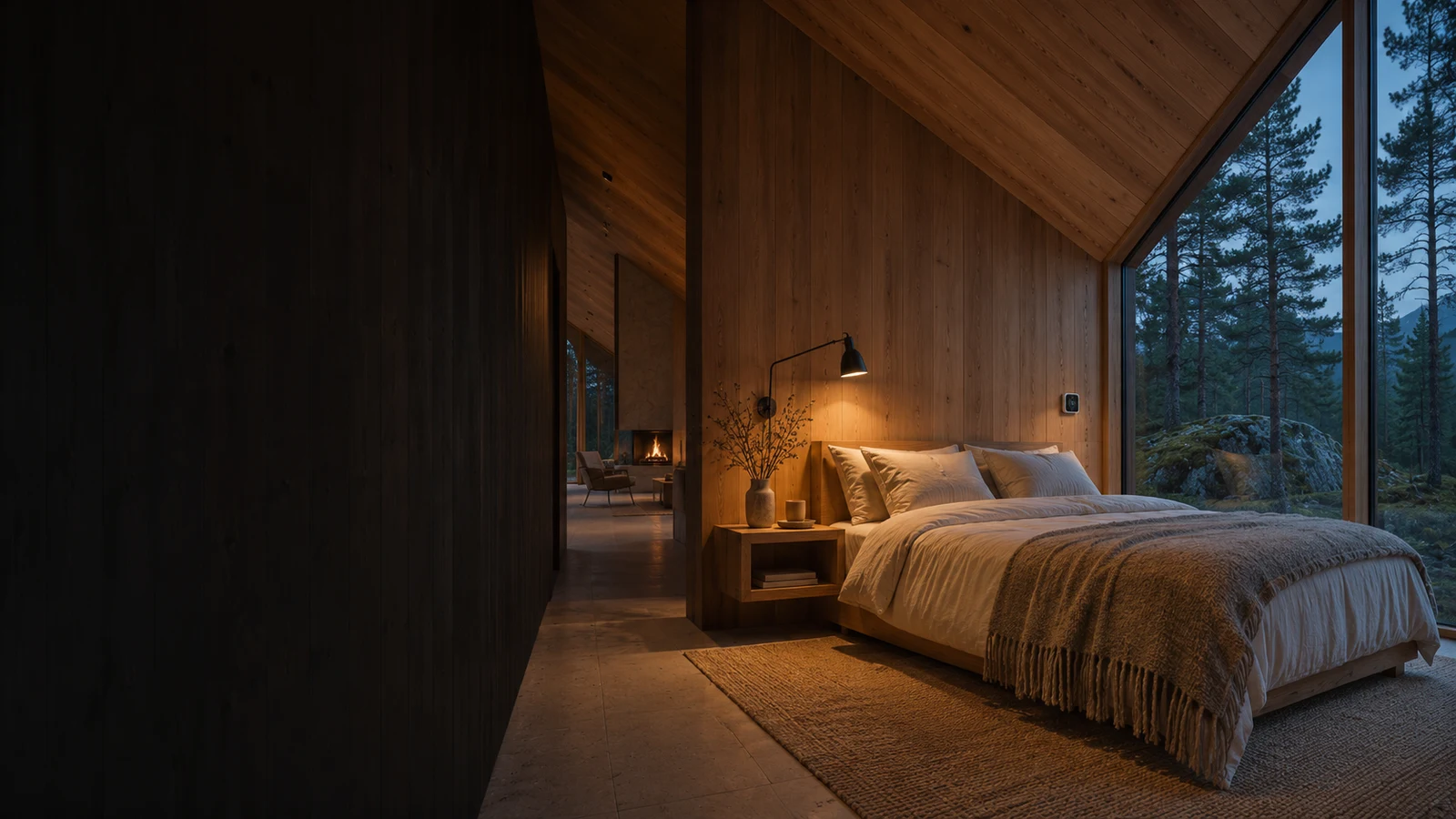
You set the morning time for the bathroom. Zonal heating aims for the set temperature in that zone without changing settings in the bedroom. For underfloor heating, you need to start the schedule earlier: the floor heating needs time to warm up.
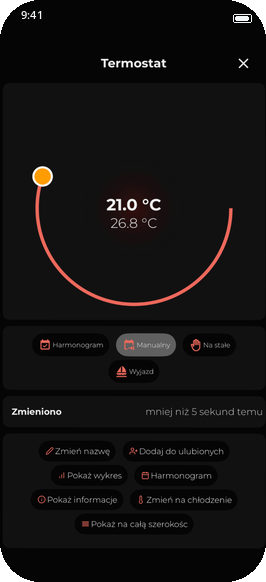
Cooler bedroom, warmer bathroom, personalized living room settings. Where installation allows individual control, temperature follows how rooms are used.
Set separate times for weekdays and weekends. Start underfloor heating earlier and allow for the time the building takes to warm up.
The supported controller can offer ventilation modes, such as normal and boosted. The signal from the appropriate sensor may be an additional condition if it was planned in the design.
First, we check if the specific model allows changing mode, desired temperature, or only reading data. Factory security features work independently of scenes.
Compatible meter shows consumption of the entire building or selected circuit, depending on the measurement location. Easier to see what is using energy before you change settings.
If you have an inverter or energy storage, we will separately check data access and control capabilities. Production readout does not mean the system controls charging. A compatible integration is required for this function.
Floor heating, radiators, and heat pumps react differently. We determine what can be controlled separately, what should remain with the manufacturer's controller, and where measurement makes sense. Usage helps make decisions, but does not guarantee a specific bill. In homes with large windows, it's advisable to plan shading in parallel.
Shading →At the demonstration, it's worth seeing the difference between measured and desired temperature and how a single zone changes.
Senja show cabin →We don't assume this. Usually, it's about sharing selected features and collaborating with the factory controller.
There are no guaranteed savings. First, we determine what you measure, how the building operates, and which settings you can actually change.
Specify heating type, device model, and rooms where you want different settings. We'll determine what's worth connecting and where to start.
Back